7 Mistakes You’re Making With Your Miami Rental Vacancy (And How to Fix Them)
The Miami rental market in 2026 is no longer the frantic "Gold Rush" of 2021-2022. While core neighborhoods like Brickell, Downtown, and Edgewater maintain tight occupancy rates, the broader Miami-Dade metro has shifted toward a more balanced, renter-friendly equilibrium.
With vacancy rates in the metro hovering around 8.1% and over 11,000 new units recently delivered, landlords can no longer rely on scarcity alone to drive Net Operating Income (NOI).
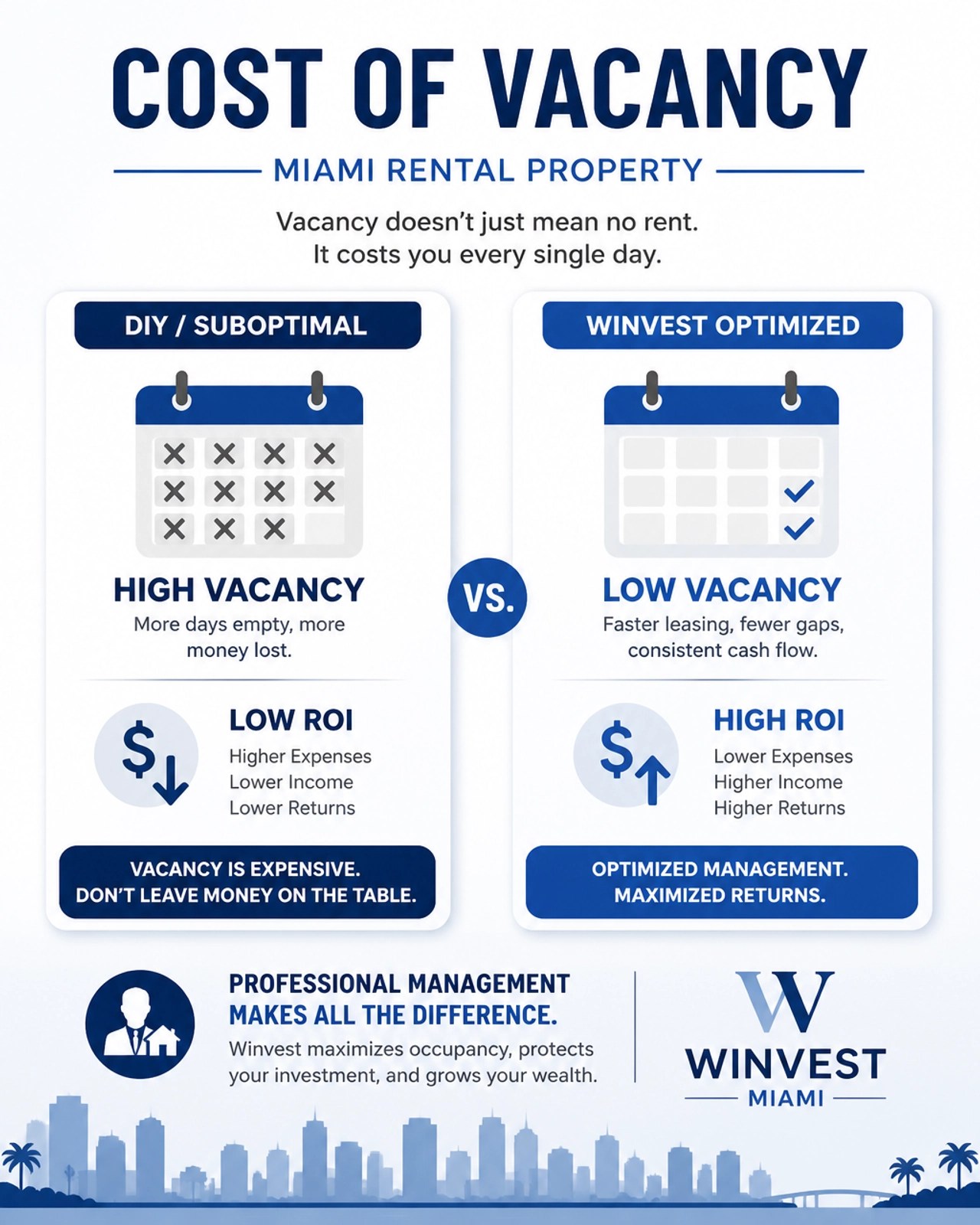
In this environment, a single month of vacancy is not just a "hiccup": it is a direct hit to your capitalization rate (Cap Rate) and Internal Rate of Return (IRR). If your unit is sitting on the market for more than 14 days, you are likely making one of these seven strategic errors. Here is how to identify, analyze, and operationalize the fix for the most common Miami vacancy mistakes.
1. Mistake: Anchoring to 2022 Peak Pricing
The Challenge: Many owners are still benchmarking their rents against the explosive 2022-2023 cycle, where double-digit YoY increases were the norm. In May 2026, the reality is a stabilized 0.7% YoY growth in core Miami. Anchoring to an outdated high-water mark leads to "stale" listings that the market ignores.
The Optimized State: Implement Dynamic Market Pricing. At Winvest Management, we utilize neighborhood-level market comps that prioritize active listings over historical closings.
- Action: If your listing has zero high-quality leads after 7 days, execute a 2–4% price correction immediately. In a plateauing market, being the most expensive unit in the building is a liability, not a badge of honor.
2. Mistake: Ignoring "Effective Rent" Concessions
The Challenge: You see a nearby Class A building listing units for $3,100 and price yours at $3,000 to "beat" them. However, if that building is offering 8 weeks of free rent, their effective rent is approximately $2,625. You are effectively overpricing by $375 per month.
The Optimized State: Analyze the competition’s Net Effective Rent.
- Formula: (Total Rent for Lease Term - Concessions) / Lease Term = Net Effective Rent.
- The Play: Instead of a flat price drop, consider offering a one-time move-in credit. This protects your "sticker price" for future renewals while capturing immediate demand.
3. Mistake: Lagging in Property Condition vs. New Supply
The Challenge: With 11,000+ new units entering the market, tenants are increasingly selective. A unit with 2015-era appliances and worn flooring will not compete with a brand-new build in Wynwood or Coral Gables, even if the price is identical.
The Optimized State: Prioritize High-ROI Asset Protection.
- The Fix: You don't need a full gut-renovation. Focus on the "High-Impact Three":
- Lighting: Swap yellow incandescent bulbs for 3000K-4000K LEDs.
- Hardware: Modernize cabinet pulls and faucets.
- Connectivity: Ensure high-speed Wi-Fi infrastructure is ready for remote workers.
- Refer to our Miami Property Management Services for a full maintenance and preventative schedule that protects asset value.
4. Mistake: Sub-Par Listing Assets & Weak Syndication
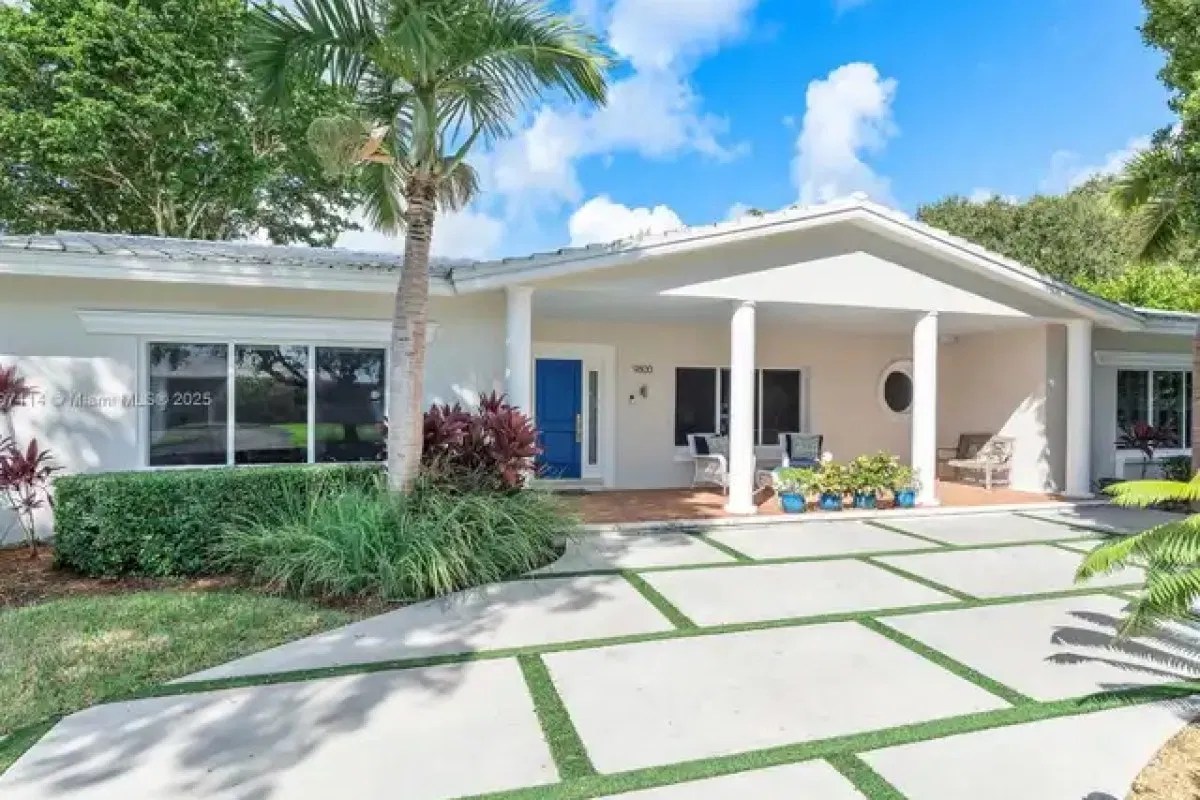
The Challenge: Using dark, iPhone-shot photos or a description that misses key local details (e.g., proximity to the Metromover or specific HOA amenities) is a conversion killer. In 2026, the first "showing" happens on a smartphone screen.
The Optimized State: Institutional-Grade Marketing.
- The Standard: Professional high-res photography, 3D virtual tours (Matterport), and drone shots for properties in areas like Miami Beach.
- Syndication: Your listing must be pushed to a broad network including Zillow, Rent.com, and local MLS feeds.
- Outcome: Broad exposure reduces "Time on Market" (TOM) by an average of 35% compared to DIY listings.
5. Mistake: High-Friction Tenant Screening
The Challenge: Either your screening is too lax (leading to costly evictions) or so manual and slow that high-quality tenants: who are likely applying to multiple units: sign elsewhere while you're still "checking references."
The Optimized State: Automated, 24/7 Screening SOPs.
- The Process: Utilize a real-time Owner Portal that integrates credit, criminal, and eviction history with income verification (3x rent-to-income ratio).
- The Rule: Respond to inquiries within 2 hours and finalize screening within 24 hours. In Miami’s competitive landscape, speed is a strategic advantage.
6. Mistake: Ignoring the Value of Renewal Retention
The Challenge: Landlords often focus so much on the "new lease" that they neglect the current tenant. In a moderating market, a vacancy is often more expensive than a modest rent increase. Between turnover repairs, cleaning, and leasing fees, a one-month vacancy can cost you 8-12% of your annual gross income.
The Optimized State: Proactive Renewal Management.
- SOP: Initiate renewal discussions 90 days prior to lease expiration.
- The Logic: If the market is flat, offer a 0% increase to a "Grade A" tenant. Protecting your cash flow by avoiding a 30-day vacancy is often more profitable than chasing a theoretical $50/month increase.
7. Mistake: Miscalculating Operational Cost Escalations
The Challenge: Florida insurance premiums and HOA special assessments (driven by new condo reserve laws) have significantly shifted the "break-even" point for many Miami owners. If you set your rent based only on your mortgage, you are likely operating at a sub-optimal NOI.
The Optimized State: Clinical Financial Reporting.
- Data-First Approach: You must underwrite your property with a "Reserves for Replacement" line item.
- Transparency: Use Tax-Ready Reports to track every dollar. Understanding your true operating expense ratio allows you to price your vacancy for profit, not just to "cover the mortgage."

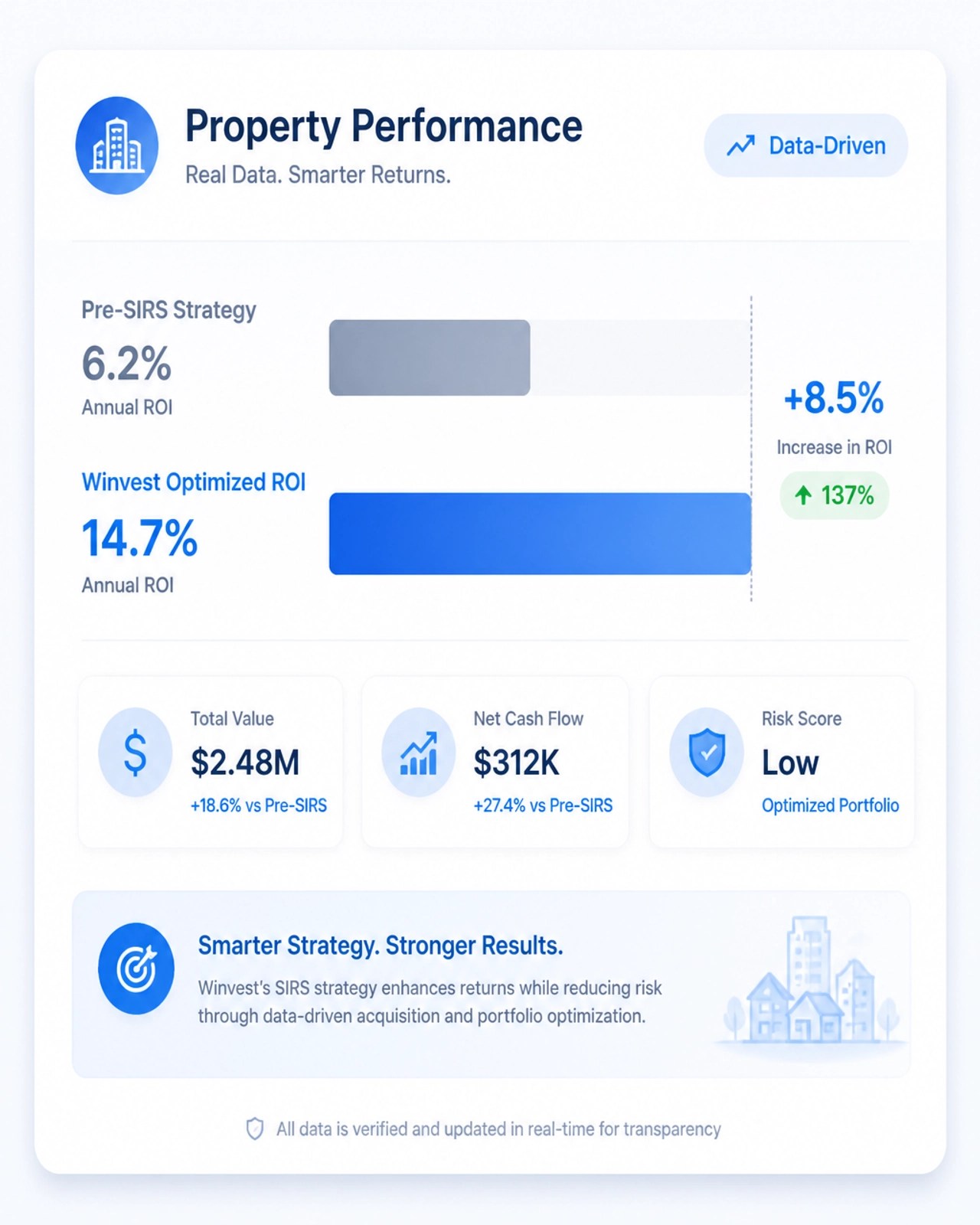
Comparison: DIY Management vs. Winvest Optimized Strategy
| Metric | DIY / Suboptimal State | Winvest Managed State |
|---|---|---|
| Pricing Strategy | "Feel-based" or historical anchoring | Data-driven dynamic pricing |
| Vacancy Duration | 30–60 Days | 12–18 Days (avg) |
| Tenant Quality | Variable (Manual screening) | Institutional-grade verification |
| Marketing | Basic Portal Listings | Professional Media + Broad Syndication |
| Operational Focus | Reactive Maintenance | Proactive NOI Optimization |
The Bottom Line
Maximizing your ROI in the 2026 Miami market requires moving away from "accidental landlording" toward a professional, asset-management mindset. Every day your property sits vacant is a day of lost capital that you cannot recover.
Are you ready to stop the "vacancy bleed" and operationalize your rental portfolio? View our full suite of services or contact us today for a comprehensive rent analysis of your Miami property.
